
Last Updated: October 6, 2026
Modern restaurants use POS systems as a way to improve their operations. Apart from payment processing, a POS system allows businesses to control orders, menus, employees, inventory, customer information, report-making, and operations.
Quail POS is a point-of-sale system used in the restaurant industry to provide food service businesses with ordering and operational solutions.
This article belongs to Business Operations
Table of Contents
What Is Quail POS?
Quail POS is a point-of-sale technology solution that supports operations in the restaurant and hospitality sector. POS system for restaurants links ordering with payment processing and management functions.
Instead of using multiple systems for each process, a business can use POS technology to collect all operational information in one place.
Depending on the setup, a POS system for the restaurant can support:
- Order management
- Payment processing
- Menu management
- Table management
- Inventory management
- Employees management
- Sales reporting
- Customer management
- Online ordering
Why POS Systems Are Important for Restaurants
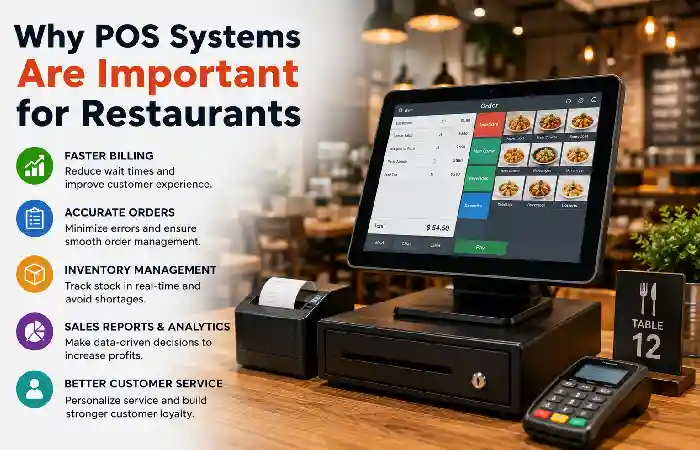
A restaurant makes a large number of orders every day. The manual approach can increase the chance of errors and make it more difficult to understand the performance of the business.
POS system can help in organizing these processes through digitization of transactions and availability of information for authorized employees.
For instance, an order entry can be transmitted to the proper department while keeping transaction information at the same time.
Order Management
Order management in the restaurant is crucial because mistakes can influence customer satisfaction and cause food waste.
POS system helps in recording:
- Ordered items
- Modifiers
- Quantity of products
- Special instructions
- Discounts
- Payment data
POS system can decrease issues that occur due to handwritten tickets or poor communication.
Payment Processing
Payment processing is among the most basic functions of a POS system.
The modern restaurant POS solution might offer multiple payment options such as:
- Credit cards
- Debit cards
- Contactless payments
- Mobile wallets
- Cash
Businesses should check which payment processors and what payment methods the chosen POS system supports.
Menu Management
The restaurant menus are frequently changing due to seasonal products, price changes, product availability, promotions, etc.
The digital POS system can allow authorized users to modify the products, prices, categories, and options in the menu.
It will help ensure that staff are using the updated information.
Inventory Management
Inventory management is also important for food-service businesses.
Restaurant owners should control the availability of ingredients, beverages, packaging materials, and other inventory.
POS data can show what products are selling and possibly help to analyze purchasing patterns.
However, accurate inventory data requires the proper setup of the software and proper data entry.
Employee Management
Restaurant POS systems can also be helpful in managing employees.
Depending on the platform, it can provide such features as:
- User accounts
- Staff permissions
- Time tracking
- Sales performance
- Access rights based on the role
Effective employee management is an important part of restaurant operations, and businesses can also explore platforms such as Employzilla when looking for employee and workforce-related solutions.
Permissions can help control sensitive processes by only allowing them for authorized employees.
Sales Reporting
To manage the restaurant effectively, its owner needs accurate information about the business.
It includes, but is not limited to:
- Total sales
- Popular menu items
- Payment methods
- Used discounts
- Busiest times
- Average transaction values
- Activity of the staff members
Analyzing this information will help restaurant owners make more informed decisions.
Clear financial communication is also important when dealing with customers, and creating professional quotes and estimates for small businesses can help service-based businesses present pricing and project details more effectively.
Online Ordering
Currently, online ordering is one of the main aspects of restaurant operations.
POS system that integrates the ordering channels will help restaurant operators avoid manual order importing.
Benefits of Restaurant POS Technology
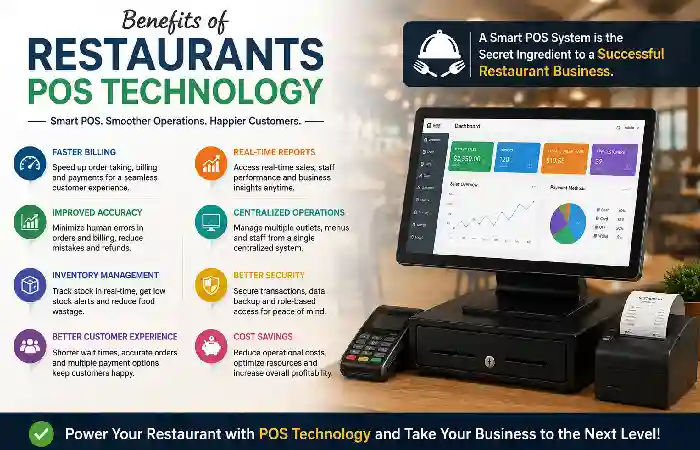
There are multiple benefits of a correctly configured POS system.
Increased Efficiency
The system allows you to automate the process of entering orders and digital ordering.
Higher Accuracy
Electronic orders can minimize the risk of errors associated with handwritten orders.
Centralized Information
All sales, orders, and operational data can be managed via one system.
Faster Reporting
Managers can access all information about their business without calculating each transaction manually.
Improved Customer Experience
Faster order processing and accurate payments will positively influence customer experience.
Choosing a POS System
There are some aspects that restaurant owners have to keep in mind while choosing a POS system.
User-Friendliness
It is necessary that the system is user-friendly and employees do not require much training.
Hardware
It is necessary to determine what hardware terminals, tablets, printers, and other equipment one may need.
Payment Support
It is necessary to understand which payment processors and options the POS system supports.
Reports
One has to see what kinds of reports are generated by the system and whether they have all required information.
Integration
It is vital to check whether the system can integrate with accounting, payroll, online ordering, delivery, and loyalty systems.
Costs
It is required to calculate the overall cost of the system, including subscription, hardware, payment processing, installation, training, and maintenance.
Restaurants planning to invest in new technology should also consider their available capital and explore business funding options when additional financing is needed for technology, equipment, or business expansion.
Security Aspects
POS systems are responsible for valuable information about the business and its payment transactions, so they have to be highly secure.
One has to use strong passwords and logins, configure the network correctly, and update the software regularly.
However, it is also important for restaurants to work with reputable providers and follow all payment-security regulations.
Frequently Asked Questions
What is Quail POS?
Quail POS is a POS technology that is used in restaurants and food service businesses.
What can a restaurant POS system do?
A restaurant POS system is able to process orders and payments, as well as manage menus, inventory, employees, generate reports, and manage customers, etc.
Does a POS system manage restaurant inventory?
Some POS systems can manage inventory or at least integrate with inventory management systems.
Why is POS technology good for restaurants?
This technology helps improve order accuracy, organize transactions, process payments, and receive valuable sales information.
What should restaurants consider when choosing a POS?
Comparing user-friendliness, hardware, payment options, integration, reports, security, maintenance, and total costs is important.
Conclusion
Quail POS is an example of the application of POS technology in restaurants. A properly functioning POS system helps connect order management, payment processing, report generation, menu management, employee workflows, and other processes.
In order to choose the best POS system for their needs, restaurants have to understand their requirements first. The right system will be intuitive, compatible, secure, scalable, and informative.